Compliance in healthcare IT and medical coding is not just a regulatory requirement but a fundamental pillar of operational integrity and patient safety. Organizations working with healthcare data must adhere to strict standards to ensure accuracy, confidentiality, and ethical handling of information. In medical coding, even minor errors can lead to claim denials, revenue loss, or legal complications, while in healthcare IT, non-compliance can expose sensitive patient data to breaches. Improving compliance requires a combination of structured processes, skilled professionals, and continuous monitoring systems.
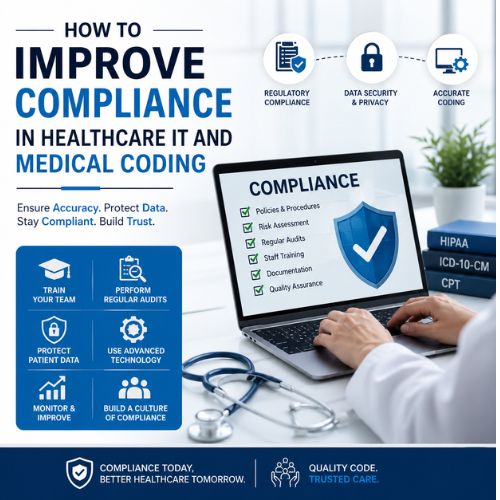
Healthcare IT and medical coding companies operate under multiple regulatory frameworks such as HIPAA and ICD-10 guidelines, which define how patient information should be recorded, stored, and transmitted. These standards are designed to protect patient privacy and ensure uniformity in medical documentation. Organizations must stay updated with evolving regulations and implement them effectively across all departments. Regular training sessions and policy updates play a crucial role in aligning employees with these standards.
A well-trained workforce is essential for maintaining high compliance levels. Medical coders and IT professionals must be equipped with up-to-date knowledge of coding systems, software tools, and regulatory requirements. Continuous education programs help employees understand changes in coding guidelines and compliance expectations. Practical training, workshops, and certification programs enhance accuracy and reduce the risk of errors. Organizations that invest in employee development often experience fewer compliance issues and improved overall quality.
Regular internal and external audits are vital for identifying compliance gaps and improving quality. Audits help organizations evaluate coding accuracy, documentation practices, and adherence to regulatory standards. By analyzing audit results, companies can pinpoint recurring errors and implement corrective actions. Automated audit tools in healthcare IT systems can streamline this process, ensuring real-time monitoring and reporting. A strong audit framework not only improves compliance but also builds trust with clients and regulatory bodies.
Technology plays a significant role in enhancing compliance in healthcare IT and medical coding. Advanced software solutions can automate coding processes, reduce manual errors, and ensure accurate data handling. Electronic Health Records systems and coding tools provide built-in compliance checks that help maintain consistency and accuracy. Additionally, data encryption and secure access controls protect sensitive patient information from unauthorized access. Integrating modern technology into daily operations enables organizations to maintain high compliance standards efficiently.
Protecting patient data is a core aspect of compliance in healthcare IT. Organizations must implement robust security measures such as encryption, multi-factor authentication, and regular system updates to prevent data breaches. Access to sensitive information should be restricted based on roles and responsibilities. Regular security assessments and vulnerability testing help identify potential risks and ensure that systems remain secure. Maintaining strong data privacy practices not only ensures compliance but also enhances the organization’s reputation.
Compliance should not be treated as a one-time activity but as an ongoing organizational culture. Leadership plays a key role in promoting compliance by setting clear expectations and encouraging accountability. Employees should be aware of the importance of compliance and feel responsible for maintaining it in their daily tasks. Open communication, feedback mechanisms, and recognition of compliance efforts can foster a positive environment. When compliance becomes a shared responsibility, organizations can achieve long-term success.
Improving compliance is a continuous process that requires regular evaluation and adaptation. Organizations should establish key performance indicators to measure compliance effectiveness and track progress over time. Feedback from audits, employee inputs, and industry updates should be used to refine processes and policies. By adopting a proactive approach, healthcare IT and medical coding companies can stay ahead of regulatory changes and maintain high-quality standards.
Improving compliance in healthcare IT and medical coding involves a strategic blend of training, technology, audits, and a strong organizational culture. By focusing on accuracy, data security, and continuous improvement, organizations can minimize risks and enhance operational efficiency. Compliance is not just about meeting regulations but about building trust, ensuring patient safety, and delivering high-quality healthcare services.
Acurants Solutions is a trusted medical coding company delivering accurate coding, billing, and complete RCM solutions.
Copyright © 2026. Designed by Profuture Tech Solutions Private Limited.