• April 30, 2026
  • comments (0)
  • 4 min read

Why Denial Management is Crucial in Medical Billing and Coding

Introduction

Denial management is a vital component of the healthcare revenue cycle. In today’s complex billing environment, even small errors in coding or documentation can lead to claim denials, delayed payments, and revenue loss. For medical coding companies and healthcare providers, an efficient denial management process is not just an operational task—it is a strategic function that directly impacts financial stability and patient satisfaction.

Understanding Denial Management

Denial management refers to the systematic process of identifying, analyzing, and resolving denied insurance claims. When a payer rejects a claim due to coding errors, missing information, or policy issues, it must be reviewed, corrected, and resubmitted.

Rather than treating denials as isolated incidents, successful organizations approach them as opportunities to improve internal processes. By understanding the root causes behind denials, medical coding teams can prevent similar issues in the future and ensure smoother claim processing.
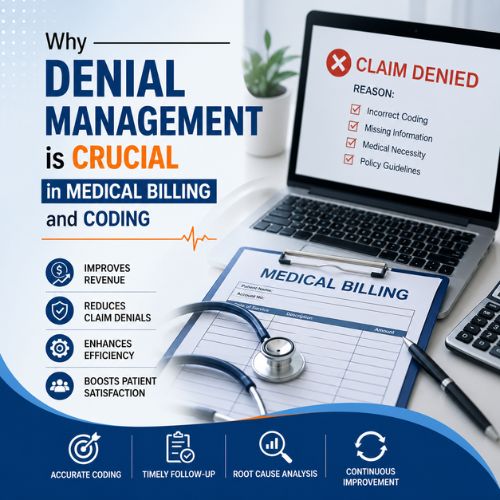
The Financial Impact of Claim Denials

Claim denials can significantly affect the financial health of healthcare organizations. Every denied claim represents delayed or lost revenue. If not addressed promptly, these denials can accumulate, leading to cash flow disruptions.

In many cases, reworking denied claims requires additional time, staff effort, and administrative costs. Studies show that the cost of reprocessing a denied claim can be much higher than submitting it correctly the first time. Effective denial management helps reduce these unnecessary expenses and improves overall profitability.

Improving Coding Accuracy

Accurate medical coding is at the heart of successful denial management. Coders must ensure that diagnoses and procedures are documented correctly using the appropriate codes. Even minor mistakes can result in claim rejection.

Ongoing education and adherence to updated coding guidelines are essential. Medical coding companies that invest in skilled professionals and continuous training programs often see a significant reduction in denial rates. Accurate coding not only minimizes denials but also ensures compliance with regulatory standards.

Enhancing Revenue Cycle Efficiency

Denial management plays a crucial role in optimizing the revenue cycle. When claims are processed correctly the first time, it leads to faster reimbursements and improved cash flow.

An efficient denial management system includes timely follow-ups, proper documentation, and streamlined workflows. Automation tools and analytics can also help track denial trends and identify areas for improvement. By integrating denial management into the broader revenue cycle strategy, organizations can achieve greater operational efficiency.

The Role of Technology in Denial Management

Technology has transformed how denial management is handled in medical billing and coding. Advanced software solutions can automatically flag errors, verify insurance details, and track claim status in real time.

Data analytics tools provide insights into denial patterns, enabling organizations to make informed decisions. Automation reduces manual workload and allows staff to focus on more complex tasks, improving both efficiency and accuracy

Compliance and Regulatory Importance

Healthcare billing and coding are subject to strict regulations and compliance requirements. Incorrect coding or billing practices can lead to audits, penalties, or legal issues.

Denial management helps ensure that claims are compliant with payer policies and industry standards. By maintaining accurate records and following proper procedures, organizations can reduce compliance risks and build trust with payers and patients.

Enhancing Patient Satisfaction

While denial management is often viewed from a financial perspective, it also impacts patient experience. Billing errors and claim denials can lead to confusion, delays, and unexpected costs for patients.

By reducing denials and ensuring accurate billing, healthcare providers can offer a smoother and more transparent experience. This builds patient trust and strengthens the provider’s reputation.

Conclusion

Denial management is a critical function in medical billing and coding that goes beyond correcting rejected claims. It is a proactive approach to improving accuracy, efficiency, and financial performance.

For medical coding companies, investing in effective denial management strategies can lead to reduced errors, faster reimbursements, and better compliance. By focusing on prevention, leveraging technology, and maintaining high coding standards, organizations can turn denial management into a powerful tool for growth and success.

Tag:
Share Article:

adminpro

Leave a comment

Your email address will not be published. Required fields are marked *

Acurants Solutions is a trusted medical coding company delivering accurate coding, billing, and complete RCM solutions.

Copyright © 2026. Designed by Profuture Tech Solutions Private Limited.